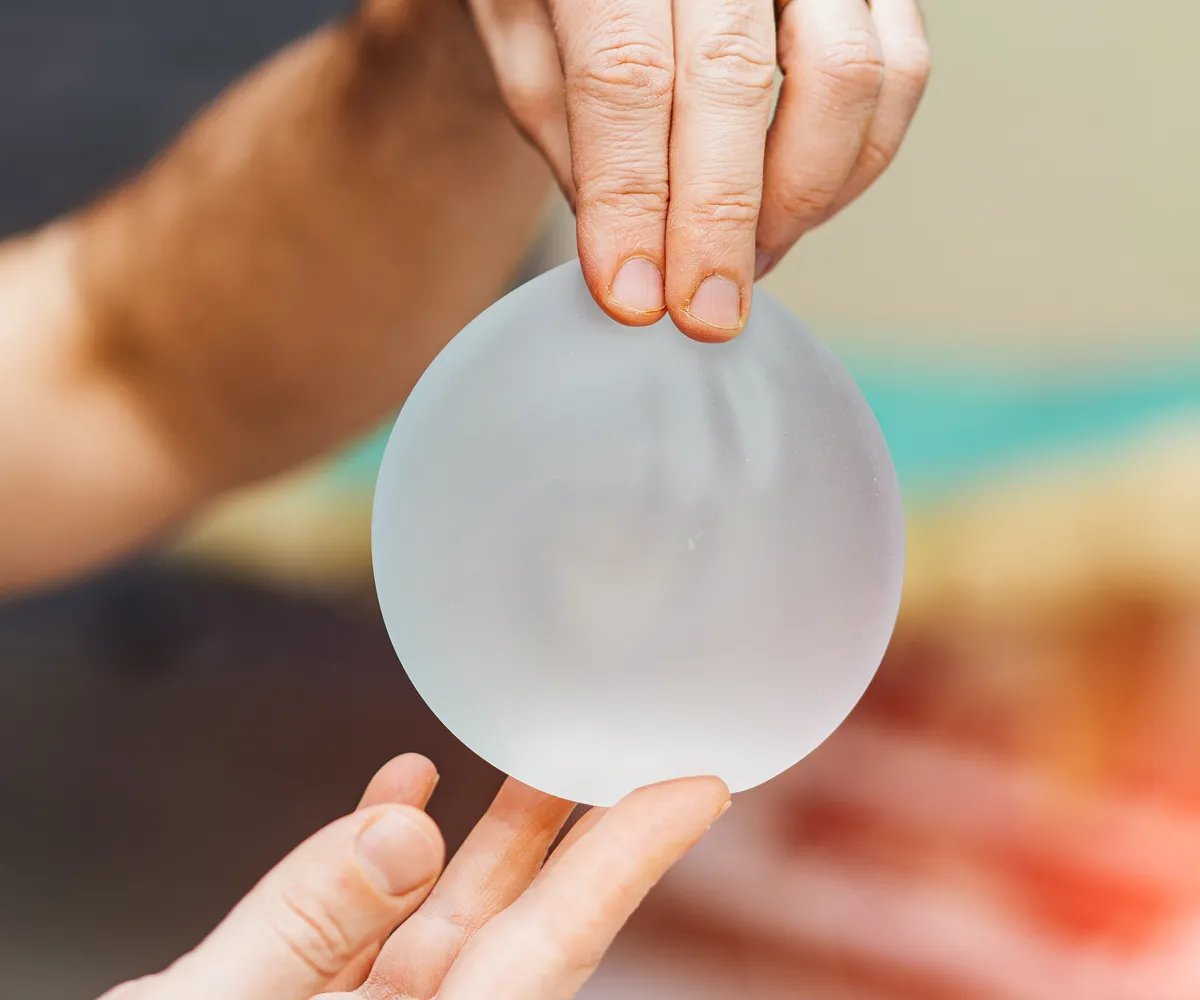
Want larger breasts — but not sure which technique is right for your body?
Implant over or under the muscle? General or local anesthesia? Recovery in days or weeks? These questions have answers — and they depend on your anatomy, not on trends.
Breast augmentation is among the most frequently performed cosmetic surgeries in the world — and also one of the most misunderstood. Most websites explain what the surgery is, but not why the same technique that works for one patient may be wrong for another. Dr. Alexandre Charão, a plastic surgeon recognized by SBCP, AMB and CFM, and a member of BAPS, has dedicated himself to body contouring since 2004 in Botafogo, Rio de Janeiro, and offers three distinct approaches — each with a precise indication, based on objective anatomical criteria for implant selection.
Which breast augmentation technique with implants matches your profile?
Three ways to plan breast augmentation, depending on your anatomy, desired look, and recovery needs.
Transaxillary breast augmentation — implants placed through an armpit incision
In selected patients, a breast implant can be placed through an incision in the natural crease of the armpit. This transaxillary approach1 avoids an incision on the breast itself. Your anatomy, implant choice, and anesthetic plan determine whether it is suitable for you. The goal is fuller, natural-looking breasts with a carefully positioned scar. Operative time, scar appearance, and recovery vary by patient; Dr. Alexandre will explain what is realistic for your specific case.
R24R — Real 24 Recovery
Based on Tebbetts's Dual Plane positioning and the predictable 24-hour return to activities published in Plastic and Reconstructive Surgery in 2002, the R24R technique combines Dual Plane placement (partially under the pectoralis muscle) with minimal tissue trauma, specific instrumentation and accelerated recovery protocols after breast augmentation2. Clinical studies have shown that 96% of patients return to daily activities just 24 hours after surgery. It is indicated for patients with mild ptosis (sagging) or thin tissue in the lower breast who need an ultra-fast recovery without giving up upper muscle coverage.
Motiva Preservé™ — tissue preservation
Preservé was developed around the approach of Dr. Manuel Chacon-Quiros and documented in the tissue-preservation literature, with international scientific collaboration including Prof. Marcos Sforza. The implant is positioned while preserving the fascial planes and natural structures of the breast, without extensive muscle dissection, through an incision of about 2.5 cm (1 inch) and single-channel instruments that prevent direct manual handling of the implant. The result is faster recovery, the documented safety profile of Motiva implants, and a more natural feel and movement.
What determines which technique is right for you?
The right technique isn't the most modern one — it's the one that respects your anatomy and your life.
The indication is defined during the consultation based on factors such as breast tissue thickness, degree of ptosis (sagging), chest proportions, skin elasticity and the need for a quick return to activities. Dr. Charão follows the High Five™ system by Tebbetts and Adams — an implant selection process based on anatomical measurements — and applies the Weight-Loss and Metabolic Preparation Method, aligned with perioperative nutritional and metabolic support guidelines. Fast Track Recovery — a faster, more comfortable recovery and refined scars — is integrated into all three techniques, aligned with multimodal recovery protocols after breast augmentation, with a private WhatsApp group for each patient throughout the postoperative period.
All surgeries are performed at Hospital Glória D'Or, in the Glória neighborhood, part of the D'Or Network — Brazil’s largest hospital network, with annual Joint Commission International (JCI) accreditation. Dr. Charão's work was recognized by O Globo's "Faz a Diferença" (Makes a Difference) Award in 2006 and by a report in The Washington Post. Over 200 real patient reviews on Google document the results in practice.
Technical Comparison of Procedures
Understand the differences between conventional breast augmentation and Dr. Alexandre Charão's approach:
| Criteria | Conventional breast augmentation | Dr. Alexandre Charão |
|---|---|---|
|
Available techniques
|
• One standard approach | ✓ Transaxillary approach, dual-plane placement, and Motiva Preservé™ when appropriate |
|
Type of anesthesia
|
• General anesthesia as standard | ✓ Transaxillary approach: anesthesia is selected individually |
|
Recovery time
|
✕ 3 to 6 weeks of restrictions | ✓ R24R: 96% of patients return within 24 hours |
|
Tissue preservation
|
✕ Conventional dissection that cuts ligaments | ✓ Preservé and MIA: natural ligaments and structures preserved |
|
Postoperative pain
|
✕ Frequent muscle spasms | ✓ Preservé: no extensive muscle dissection / R24R: multimodal accelerated recovery |
|
Scar size
|
• Standard inframammary incision (under the breast) | ✓ Transaxillary: incision in the armpit crease / Preservé: small incision beneath the breast when indicated |
|
Implant selection
|
• Based on preference or availability | ✓ High Five™ System — objective anatomical measurements |
|
Preoperative preparation
|
• Fasting and basic lab tests | ✓ Weight-Loss and Metabolic Preparation Method |
Breast Augmentation FAQ
What breast augmentation approaches does Dr. Alexandre offer?
MIA (armpit incision, local anesthesia), based on Dr. Chacon-Quiros's tissue-preservation principles; R24R Dual Plane (return within 24 hours, Tebbetts protocol); and Motiva Preservé™ (tissue preservation). The indication depends on each patient's anatomy, degree of ptosis and individual needs.
What makes Motiva Preservé™ different from conventional implants?
Preservé keeps the breast's ligaments and natural structures intact during surgery — Dr. Chacon-Quiros's Breast Tissue Preservation approach, with retrospective validation of tissue-preserving augmentation and international scientific collaboration including Prof. Marcos Sforza. The result: a more natural feel, faster recovery and the documented safety profile of Motiva implants.
What is R24R, and why do 96% of patients return to activities within 24 hours?
R24R stands for Real 24 Recovery — real recovery within 24 hours. Based on Dr. Tebbetts's work, it combines Dual Plane placement with minimal tissue trauma and accelerated recovery protocols. In a prospective series, 96% of patients resumed normal activities within 24 hours — moving their arms, driving and working the following day.
Does transaxillary breast augmentation require general anesthesia?
Anesthesia depends on the procedure and your medical assessment. With a transaxillary approach, the implant is inserted through an incision in the armpit, avoiding an incision on the breast itself. Dr. Alexandre will explain the expected scars, recovery, and risks during your consultation.
Who are Dr. Manuel Chacon-Quiros and Prof. Marcos Sforza?
Dr. Manuel Chacon-Quiros is the creator of the Breast Tissue Preservation concept and a pioneer of minimally invasive techniques in breast surgery. Prof. Marcos Sforza is a Brazilian plastic surgeon based in London and co-author of studies on Motiva implants and hybrid protocols published in the Aesthetic Surgery Journal. Both are international references whose protocols support Dr. Charão's practice.
How does Dr. Charão choose the implant size?
The selection follows the High Five™ system by Tebbetts and Adams — objective anatomical measurements: breast base width, tissue thickness, skin elasticity and chest proportions. The ideal size is the one that respects the limits of the patient's body, not the largest volume available.
Can breast augmentation be combined with other surgeries?
Yes. Dr. Charão performs combined procedures: mastopexy (breast lift) with implants and the Mommy Makeover (breasts + abdomen in the same surgery). Clinical series show that combining breast and abdominal surgery in selected patients can be safe and can reduce the number of times under anesthesia and the overall recovery time.
Where does Dr. Charão perform breast augmentation?
At Hospital Glória D'Or, in the Glória neighborhood of Rio de Janeiro — part of the D'Or Network, with annual JCI accreditation. The clinic welcomes patients from all over Brazil and abroad, with care in Portuguese, English and French.
Ready to choose the right technique for your body?
Schedule an in-person consultation in Botafogo or a private virtual consultation directly with Dr. Alexandre Charão's team.
📅 Schedule your consultation on WhatsApp📚 Scientific Bibliography
- Chacon-Quiros M, Sforza M, Solis-Chaves P, et al. The 3-year results of a 100-patient prospective study of safety and effectiveness of Mia Femtech. Aesthet Surg J. 2025. doi:10.1093/asj/sjaf196 [Note: MIA Femtech not available in Brazil — reference for scientific basis of minimally invasive philosophy and tissue preservation]
- Seren JM, Cervantes A, Fontbona M, et al. A Decalogue on Enhanced Recovery After Breast Augmentation Surgery (ERABAS). Aesthetic Plast Surg. 2024. doi:10.1007/s00266-024-04231-7